Episode Transcript
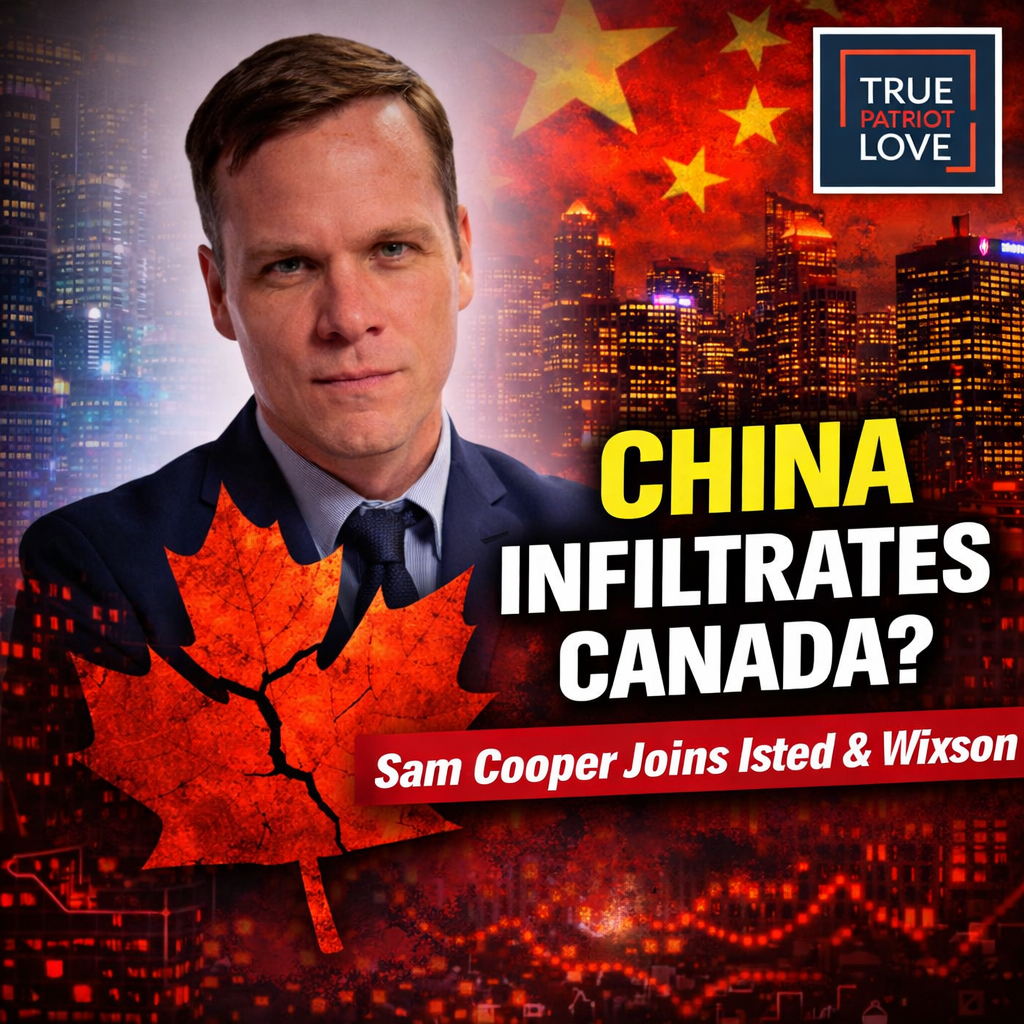
[00:00:00] Speaker A: All right. Well, earlier today Brian Istad and I had a chance to speak with Sam Cooper. He's one of Canada's leading investigative reporters covering foreign interference, organized crime and national security.
He first gained attention for his exposing of alleged Chinese Communist party influence networks operating inside of Canada and the links between transnational crime and political systems. Sam is the best selling author of Willful Blindness, one of my favorite books. And he now runs the Bureaucracy, an independent investigative news platform focused on intelligence, corruption and sovereignty issues. His reporting has sparked parliamentary inquiries, international scrutiny and an ongoing national debate about how seriously Canada is confronting foreign interference.
Here's that interview.
Well, here we are joined by Sam Cooper, Brian Isted. And guys, thanks so much for taking the time today as I was able to kind of glean to off, off air.
This is a big deal for me. I'm a big fan of what Sam does and I know many Canadians have had their eyes opened wide.
Sam, thanks for joining us.
[00:01:10] Speaker B: Really glad to be with you today.
[00:01:13] Speaker A: You know, you, you really did spark something in a big way when you did the investigative journalism that you do, which by the way is, it seems to be disappearing on this earth. And so to have somebody doing this, looking out for Canadians and from this perspective, you really opened our eyes wide to foreign interference in a way I don't think Canadians were prepared to hear about.
[00:01:40] Speaker B: Yeah, I mean, it's kind of become a life project in a way.
And in terms of investigative journalism, I grew up in the Vancouver province and sun newsroom watching like legends like Kim Bolan, the great crime reporter, David Bains, the great financial crime investigator that pretty much single handedly exposed the Vancouver Stock Exchange for, I would say, kind of a Hell's Angels front operation for trading.
And that kind of stuff has become more and more clear by the year. I think I took the baton and dove into the international nefarious hostile states and transnational networks that have made Vancouver first and foremost an absolute convergence for the world's organized crime networks connected to the CCP and the Iranian state, Hezbollah, Mexican cartels. I just learned my, I, I learned my investigative chops there. I was motivated, I would say due to my upbringing to like understand why. Good, good, you know, people in Canada with good, good incomes, good families, couldn't afford homes. Good. Didn't work, didn't make sense. I figured it out and I'm, I'm keeping it going and I really appreciate guys like you bringing me on.
Like I say, I, I've, I've been asked to brief the Pentagon. There's some People that want me to get testified down in Washington, the German government, Taiwan, Japan. I'm, I, I'm now writing for around the World and from Canadian. So I think it's a cool Canadian success, success story. If I can be a little bit immodest.
[00:03:18] Speaker A: Yeah, no, I think that you're 100% right. It's put us on the map as having. You're putting us on the map as having eyes on the world's nefarious financial doings and how that leads to so many repercussions in the financial system and housing just in everyday life here in Canada. It was an astute, an astute moment for sure.
[00:03:38] Speaker B: Do you mind?
[00:03:39] Speaker A: And I'm sure you must be tired of doing this, but just in a nutshell, maybe you could just kind of put a fine point on, you know, willful blindness and the state of affairs at the time in the casinos and how you detected this. Do you mind just giving us a quick wrap on that so that anybody who hasn't had a chance to read the book, you will want to, when you understand this better.
[00:04:01] Speaker B: Yeah, definitely pick up the book because people, people talk about how it just exposes a network and it might make people's head hurt when they dive into it. But I've laid it out in a narrative where it's about, in a way, it's about a young reporter coming of age in a city that makes no sense and figuring it out step by step. So that's exactly how I approached it.
Around 2009, 2010, I had been reading a lot about the US subprime mortgage crisis and why their American dream had crumbled.
Wall street taking over, financialization of U.S. home prices and then it collapsing, the fraud being exposed. And I thought there has to be some element to Vancouver story about that. The housing prices of, you know, literally. I remember there was websites called like crack Shack or Vancouver Mansion and you know, yeah, yeah, you'd see a home that was run down, basically a crack shack in anywhere else in the world for 1.5 million.
And to jump to the chase, I figured out that it was a massive amount, amount of money coming from China and Hong Kong.
No one could figure out or admit publicly how. And so what I really broke the mold in is discovering the Vancouver model. And that's how portions, large portions of West Canada's economy were being used by transnational organized crime and Chinese state actors. So how it works is massive amounts of drug cash were being walked in into B.C. government casinos, especially in Richmond. A high Asian Diaspora municipality, you know, right between Vancouver and the ocean, right by the Vancouver airport there. And literally tycoons, so we're talking billionaires, military figures, Chinese officials, you know, very, very ambitious gangsters were flying in from Macau and China.
They had made a deal, you know, usually on encrypted Chinese WeChat, you know, apps or things like this. They'd made a deal with the local drug traffickers who had warehouses of fentanyl, methamphetamine, cocaine, you know, drug money collected from drug dealers across Western Canada who would drive that drug cash into, you know, Vancouver. It would be warehoused in what's called Chinese underground banks.
The wealthy gambler flies in from China or Macau. He, he meets the, the gangster banker, you know, in a parking lot outside the casino, literally gets a duffel bag of five hundred thousand or more or a hundred thousand, walks in the casino against any Canadian anti money laundering checks and balances, is allowed to gamble. His money is laundered in that way and it cycles back to China where his source of wealth is that money back in China. You know, there's a few steps here I could miss or go into greater detail, but in a nutshell, that money's going back to China, producing more fentanyl, which is coming back into North America. And America, don't get it wrong, it's going into America from Canada, being sold across Canada. You know, the. What I grew up in, the fentanyl overdose death zone of downtown Vancouver 10 years ago that I really started exposing has moved across Canada. So that's the flow of China's fentanyl cash through B.C. casinos and it goes across the economy.
[00:07:38] Speaker A: What a great summary. Thank you. Because it is very involved and I will recommend, I recommend people get into it. It's an incredible journey. I can't believe that it's not a movie already.
Maybe we'll option the rights, Brian, before we get out of here. But no, it is a fascinating read and it really did crack open what is systemically wrong with pricing houses and the drug problems and what a dumpster fire Vancouver became. It all kind of ties back to this,
[00:08:11] Speaker B: no doubt. I mean, the, I like to say that, you know, I didn't figure it all out in one whack. Back in 2016, 2017, I, you know, I broke the story of the Vancouver casino money laundering, which became known as the Vancouver model. When an Australian professor read my reports and dubbed this mode of underground transactions from China bouncing down to Peru, Mexico back up to Vancouver, the Vancouver model became an academic typology. Of money laundering. But I figured out year by year, and you're right, the dumpster fire of prices. I've now assessed with great confidence that over a trillion dollars in Vancouver model drug money laundering has washed through Toronto and Vancouver real estate. And there are many sort of story points or milestones to put that together.
I'll quickly tell you one. You know, Fintrac, that is without any Canadian bank ever facing criminal prosecution. They mapped in 2023 that during the pandemic when casinos were closed, the Chinese money launderers evolved their methods more electronically into Canada's big banks more directly. They took the casino step out and they showed how this massive map of money laundering had worked into Canadian banks, real estate, law offices. So as I say, this is the model that the US treasury now came out with, another model that says 300 billion in Chinese underground banking for Mexican cartels was discovered by the US government in about four years.
So, okay, back to Canada. Yeah, a trillion dollars in about the past decade.
[00:10:02] Speaker A: That's incredible.
Brian, I'm sorry, I'm hogging the interview. Please. I mean, I know you've got it. We both got a million questions.
[00:10:09] Speaker C: That's perfect because I wanted to jump in here. Does that trillion dollars include the PNP out west? Is that factored in there at all or.
[00:10:18] Speaker B: Yeah, so I mean the, the investor.
[00:10:20] Speaker C: Sorry, out east, out east, not out west. The PNP scheme in pei.
[00:10:26] Speaker B: In pei. So that's the, the immigrant investor scheme where I would say. So I mean, you know, to get into the weeds a little bit. Absolutely. I mean, my book details how this, the original scheme run through Jean Chris Schawinigan writing, among other places that brought in, you know, funneled through Hong Kong, Taiwan and Chinese gangsters sending in, you know, a lot of wealthy people in Canada's fraudulent immigration investor program which was dominated by people from China.
Yeah, they were run, they were running mostly into Toronto, Quebec and Vancouver in the early days. And then it migrated out to P.E.I. where I would say the same largely Liberal Party of Canada associated business networks ran a lot of Chinese investors into.
You know, there's a well known story of hundreds being, you know, connected to I believe like a small motel. So yeah, more or less the, the funnel of Chinese gangster or corrupt official or underground banking running through that PMP program in various provinces would feed into in complex ways, Vancouver and Toronto real estate.
[00:11:51] Speaker C: You met, you mentioned a bunch of American agent, three letter agencies there that want to bring you in as kind of an SME and be briefing them. Why do you think The RCMP and CP thesis are so afraid to do anything or so afraid to investigate or leverage someone with your expertise or Gary Clement or these folks, they have them on as sort of outsiders, conspiracy theorists rather than the experts that you are in this field.
[00:12:16] Speaker B: Well, that's the core question. So the bottom line first, as they say in the military, the RCMP I would assess at this point is a politically captured organization.
I don't think I've even heard from very senior political figures who I won't name out of respect to them saying the PMO and the Prime Minister would have to sign off on certain directives for the RCMP to undertake some of the investigations that I know they should. And I could go through all kinds of anecdotes that I won't. But to target. Let's say it came up in the Cullen Commission that a Chinese state connected money laundering network had come up in various agency investigations but the RCMP didn't investigate. And their mealy mouth excuse in the Cullen Commission was very memorably, they said, well there's so many money launderers out there, this one wouldn't have made a difference. Which in itself kind of true. Probably there's a lot out there.
[00:13:18] Speaker A: That's a, that's a sad admission, but it's not an excuse to avoid.
[00:13:22] Speaker B: Exactly. This is a Chinese state operation. I believe it came up in the Cullen Commission for a reason. I believe I know the people behind that particular probe. I believe they can be found pictured beside Justin Trudeau and certain candidates. I believe one of them is probably sitting on the Canada China Business Council Board if I want to be a little bit direct in what I'm saying. So back to Brian's question.
Look, I'd like to make a distinction. I mean people from the OPP at very qualified and credible levels have been, I think, wanting to talk to me whether that goes forward or not. Soon York Regional Police had me in to brief their officers on why Chinese diaspora citizens feel fearful to reach out to Canadian police about foreign interference.
So I have been brought in by both US and Canadian great enforcement and security focused units. And I continue to. I'll be flying out to Idaho in the coming months. I just got an email from Wisconsin. So look, I'm a reporter, I'm a journalist, I'm an investigator, I'm a patriot. But I'm also at this point doing some public service work reaching out to law enforcement that wants to talk to me and whether they can say it publicly or not.
Some people very senior on the Fentanyl file in Canada have been talking to me behind the scenes, but I don't think you'll hear Mark Carney's government stepping out publicly and saying they want to bring me in for consultation because what I tell them will go to some very sensitive areas.
[00:15:04] Speaker A: We're hearing more and more that the various labs are being discovered across Canada not just for fentanyl. There's massive cannabis operations being discovered. Maybe you could comment on that. But they have also infiltrated larger banking and financial institutions alongside that.
[00:15:23] Speaker B: Yeah, no doubt.
So my reporting at the Bureau has, has absolutely, I believe, established, sometimes with on the record sources, sometimes with people that can't be named, that the.
The pot industry in Canada, let's call it an industry, especially in Ontario, British Columbia, I believe Quebec.
This has been what I call Quonset hut. Factories have been rolled out across Canada from a few miles outside main cities up to the tundra lands of the north. For decades, Canada has been a major global exporter of narcotics, starting with marijuana, as my sources have stood up in a number of stories I've done for the Bureau. And that simply was repurposed from about, let's say around 2005 just to pick a year into production for methamphetamine, ecstasy. Vancouver has always been a global hub for marijuana going down to Mexico, cocaine and meth coming back up. And in the early 2000s, the CCP, the cartels and the hells Angels who work under them and with him, along with the Iranian state actors, started to turn Western Canada into a, let's just call it a sinaloa, like synthetic narcotic production hub. So that's across Canada now, completely consistent with the death zones you now see in small and large communities across Canada for fentanyl.
The scenes that I could only see in downtown Vancouver as a young reporter are across Canada. The drug labs for synthetics are across Canada. And the money laundering system feeding into the big six banks down to law offices, stock traders, cryptocurrency.
Pick an industry, oil fields, resources.
[00:17:27] Speaker A: You know, this is genuine infiltration at all levels, right?
[00:17:31] Speaker B: It's at all levels. And I could end my answer by saying I just reported on a great new report from David Luna, former sort of senior U.S. state Department counter narcotics and intelligence official.
I've worked with him and others. He came out with a new report pointing to an U.N. this is quote, unprecedented convergence of nearly 700 crime groups on the solo in Canada, connecting to 48 foreign nations.
And he assesses over $200 billion laundered per year. Through Canada. And if I can explain it this way, as he says, it's not just about drug money laundering anymore. That is the standard understanding of organized crime. Needing to convert their drug proceeds into vehicles or homes they could enjoy it's liquidity for Canada's legitimate businesses. Right. So real estate development, stock trading, everything else. And so he says Canada's peak concern is not fentanyl crossing the border into the United States, it's the whole country being leveraged as a money laundering tool.
So I think that gets your answer and that brings into context my own estimate of over a trillion in Vancouver money laundering. That Vancouver model laundering into real estate in Toronto and Vancouver. We can easily get to that figure where we have David luna from the US government now saying likely over 200 billion per year easily in Canada.
[00:19:04] Speaker A: Remarkable.
[00:19:05] Speaker C: Do you think that the money laundering is the main driver of this activity versus the espionage?
Have you thought about, is it a 50, 50, 70, 30 scale? Where do you see that?
[00:19:18] Speaker B: I haven't done a sort of Bayesian assessment of the evidence. All the new evidence comes out and I probably could put a number on it. But I'll tell you like this, Brian.
I and a close circle of Canadian experts say that you can't look at the money laundering and the fentanyl or any of the narcotics in Vancouver without looking at the encryption technology hub.
A little known story, still not understood that the Cameron Ortis, that is the, the trader, the alleged trader, the RCMP intelligence boss who was selling five eyes plans to Hezbollah Sima Loa cartel, you know, ccp, allegedly the encryption technology companies he was leaking, you know, investigation plans to wear.
We're directly connected to Chapo Guzman and the Sinaloa cartel in Vancouver who chose that location for a reason. And it's not just easy criminal profits or a lack of law enforcement. It's because my friends in enforcement and security would say Vancouver has been chosen as sort of a forward operating hostile base of operations for the Iranian networks. The CCP networks and the Mexican cartels work with them. They are an intelligence entity in themselves and they have, I believe a client relationship with the terror networks and the ccp. So you got that triangle of bad actors. Those would be the top ones that are taking over Canada right now. I would say in the money laundering and the hostile state activity go absolutely hand in hand. So I'll just say 50, 50 right now, you know, when I think about it. But it could be a different answer.
[00:21:14] Speaker A: Sam, how do as Canadians and as law enforcement, how is it that we heard nothing about this Ryan Wedding guy, until it was almost all done. It seems to me that this guy might have been one of those key players in the Vancouver market in the west coast for certain.
Yet it wasn't widely known to Canadians just how desperately he was wanted by the FBI and how involved he was.
[00:21:41] Speaker B: Absolutely. And I got a personal anecdote for that one. I mean, I was in my journey of understanding the Vancouver model, I would say in 2017, 2018, probably 2017. I was of course very focused on Chinese organized crime and the CCP as the, let's, let's just call them the upstream actor in all of this worldwide.
But I remember a colleague who, who was on the inside in Canadian government sent me the story showing Ryan Wedding, you know, in his racing suit going around a gate. I forget, maybe it was a National Post story.
And the person who is coarse is being very careful not to cross classified lines is saying, look at this person's networks.
And I didn't get it. I was like, this is a Canadian snowboarder. Yeah, he got busted for some weed and various things. He still doesn't look that important to me. But bit by bit, year by year, I understood that he was married to an Iranian lady in North Vancouver who appeared to be very connected in the Iranian state money laundering networks.
I further then learned that Ryan Wedding and these people in Vancouver were connected to these encryption technology businesses that I've started to talk about. And they would be, I believe, launched by Iranian state actors or connected along with the Mexican cartels. So year by year I started to understand that. I started to sort of poke those stories forward, I'd say in the last two years at the bureau news.
Ryan Wedding's not in my book, I don't believe, but he, he's made a big appearance on my platform over the last two years where I've laid out that look, he was down on Margarita island for a reason, running cocaine up to Halifax where a military official and I believe other officials were corrupted.
And the Canadian government knew this. I'm sure that the American government probably put them onto it.
But Ryan Wedding is absolutely, he was a major player in the story that's now emerged from Venezuela, how Venezuela and Margarita island were being used by all the cartels in a state run narco operation that used state oil planes. And of course Hezbollah was a major part of that. And I don't think they've even put the CCP piece that's atop of all of it onto the Ryan Wedding story yet.
But why were Canadians not told?
You Know why, why did the Globe and Mail in one of their few stories that I will credit them for getting the scoop on me, why didn't Canadians know that Justin Trudeau was, you know, entangled in a surveillance operation in Vancouver in 2016 with. The people that I know that were the subject of my book are high level Chinese narcos, money launderers, state actors.
Justin Trudeau was there for a reason. We still don't know. Canadians don't know. It's an unanswered question.
Same, same as, you know, I believe Ryan wedding, he's a, he's a powerful guy. But there's people in the Chinese state, Iranian state, Mexican state, who knows, maybe other states that are a lot more important than Ryan Wedding.
[00:25:10] Speaker A: Yeah, I can imagine that. That to me just seemed to be a bellwether moment for Canadians. Like, okay, this is one of our Olympians and he's entrenched in this. Where else is this going on? So I think, yeah, I hope that that questioning leads to more revelation.
[00:25:27] Speaker B: To be honest with you, if I had to. I think you hit the nail on the head there. Like, for Canadians.
Well, since my book launched at number one, that's a data point that there's enough. That is my book came out number one on Amazon.com Canada, you know, in 2021, which was huge. I never could have expected that. So there is a portion of Canadians that care.
But still not enough people were getting the message, you know, because I advocated we need a racketeering law in 2021. We need a foreign interference law. Nothing is in place. So not enough people understand. But I do think the Ryan wedding story can get a little deeper into the psyches of, of Canadians that are resistant to getting, getting their.
Is not the good guy anymore. We're a global narcotics exporter. As I said, it started with marijuana. It's been very slow and sophisticated how cartels and the CCP have come in. But seeing your former Olympian, you know, called a globally significant narco, if you're a Canadian, you don't start to get it. I mean, get your head checked. And there's enough of them that I don't think we'll get it.
[00:26:39] Speaker C: I want to, I want to quickly quote your book here because it's in the same vein as what good segue here. So you mentioned growing up and believing Canada was a bastion of uprightness and stability. Corruption, wars and spy plots happened in other countries.
Do you see this naive disconnect as a main driver of Canada's obsession to voting liberal despite all the evidence of corruption and criminal activity in the last 10 to 15 years. And it goes back obviously to the 70s of Trudeau senior. But like, what, what is this disconnect and sort of correlating Trump derangement syndrome. Elbows up psyop that evolved in the last one that I've seen you break down brilliantly. How did we get here with this to be so delusional?
[00:27:20] Speaker B: Yeah, no, I absolutely. The way you framed it is exactly how I thought about it when I was writing the book and how I've increasingly started to see it is. Yeah, my education was very blindered.
We were still at a point where Canadians couldn't see, you know, violent home invasions in impacting the, the mass society. The period I was writing about was when the big circle boys, the Chinese, you know, tried. Connected to the, you know, their military structures was only terrorizing Chinese diasporas. So the diasporas knew very well that the game had changed in Canada and the CCP was here.
We were never taught and will not be taught that in our schools, as you say. I think we're very much a product of the Pierre Trudeau ideology that is still the dominant ideology in Canada. And that is we were taught, I remember very well in civics class. Canada is a multicultural tossed salad of nations from around the world and pretty much a utopia in comparison. Maybe I'm being a little bit broad there. We were told America's a melting pot.
I'm not sure they encouraged us to make a value judgment, but I do get the sense that we were being encouraged in sophisticated ways, that the Pierre Trudeau way is working and it's the way to go. And that, that just goes to the multicultural angle. But I mean, in terms of Canada being the good guy. Yeah, we, we, we never got the sense of in school teaching that corruption could be growing. I mean, where's the current event? Current events, teaching in schools. And so at this point, I'm at. I'm kind of getting to the place where I almost do see the argument that a sort of a little bit of cultural Marxism is making its way into Canada's educational system and has.
And there's other reporters that are, that are, you know, to get on a little tangent detailing how it looks like entities like the Muslim Brotherhood are, are getting fairly involved in school curricula in Ontario. So, I mean, part of my job is, is telling people. The last thing I would say is I give my father, you know, a lot of credit. He was always kind of a contrarian in my mind until he he and his, his brother, they grew up in Saskatchewan from a family that sort of grew out of the, the Pioneer Co Op sort of Enterprise. The W.W. cooper store had, had started that and sold the Pioneer. So they were a little bit wealthy for Saskatchewan. They sent them off to l' Institut Rose in Switzerland, which is a very, the elite of the elite schools in Europe. You know, I believe North Korean dictators might have been educated there along along with European aristocrats.
And what I got out of that is my father came back very educated to the ways of the world and infused in me sort of a critical mindset that what you're getting from political parties around the world, elites around the world, you got to do your own homework, put it that way and step back and do your own research.
[00:30:46] Speaker A: I remember that. Oh, sorry, sorry.
[00:30:49] Speaker C: One last thing. So in that same vein again, how much of this do you think is Hanlon's razor? You know what I mean? Malice versus incompetence. And one of the best examples I can give, having a background in the military and law enforcement when DND did its shift from 101 to Carling campus and decided to install all of our most top secret conversations in the building that had just been ravaged by intellectual property violations on behalf of the CCP in Huawei. So like how, how many mistakes can we make over and over of this so and so called incompetence where it's just kind of obviously becoming a plot. Where do you is what's your take on that?
[00:31:30] Speaker B: Yeah, I mean when I look at the, the, the Winnipeg Level 4 lab breach and the fact that Health Canada and I guess National Research Canada gave the, the, the, the vaccine, the vaccine development joint, you know, joint project to Cansino Biologics who I'm absolutely sure CSIS would have briefed some people across Canada's government that can sino a PLA entity set up through the United Front system, you know, rather sort of graduates of the United Front community cells planted, you know, around schools in Toronto that are also involved in election interference, et cetera, et cetera. You know, this PLA entity was involved in the lab breach networks. It gets a vaccine contract from the government of Canada. You. That can't be incompetence. I believe this at certain key locations at this point you point to other breaches, other continuing schemes.
Mark Carney now going back to the poisoned well, I believe, you know, I could point to people within the Liberal Party of Canada and more importantly the, the business networks of Montreal and Quebec that effectively enough credible people in Canada say this and know this by now that effectively support and elect liberal prime ministers.
I believe those business networks and key bureaucrats and politicians are involved in malice.
[00:33:11] Speaker A: It's a fair question, you know, because incompetence does count for something in some of these areas. But like Brian points out, it's a repeated scenario that seems to become more, goes deeper and deeper and deeper into our society as Canadians. I remember that feeling myself growing up. We're a melting, we're not a melting pot. We're a collective society. You know, we want you to bring your culture here. We want you to bring, you know, your religion and your beliefs and your family values to Canada. And that's what Canada will be. And that seems to quickly have pivoted to virtue signaling over reality. So we're out there telling the world that we're great leaders in peace and love and grooviness. Meanwhile, we are out there providing a laundering operation for some of the most unsavory parts of the world and providing, you know, a drug scenario, a housing problem that is affecting both Canada and the United States.
Maybe it's time to stop virtue signaling and actually have a really hard look at how we're operating financially, how we are operating at the enforcement level for police.
What do you see, Sam, the next three to five years in Canada looking like? Do we see interference starting to get revealed and curtailed or is it just going to run deeper in the water?
[00:34:40] Speaker B: Yeah, that literally is a question that keeps me up at night.
Alberta separatism. You're looking at what looks like a growing sort of Brexit type political movement that, that could gain steam. You know, I would. If you're looking at 30% of the population polled as maybe being for separatism, I would kind of assess that the, the movement underneath that is, is stronger and broader. So you could be looking closer to a, you know, 40, up to 50, I don't know. But that, that, that's a huge piece of the puzzle for the question you just asked in terms of foreign interference. I see it growing.
I see Chinese miners, well, purported miners behind them will be Chinese transnational crime, money laundering. And intelligence operatives have a, have a hold on some critical mineral sort of important puzzle pieces in the north.
This is more. Watch Gothebureau News after this interview. You'll see more and more reporting from me on these complex operations from China that under Mark Carney's government can only gain pace. A couple of examples. Carney making a deal for cooperation between the RCMP and China's Ministry of Public Security.
Gary Clement, my contributor, my friend myself have done a number of reports by now at the Bureau, including citing recently Hong Kong groups internationally saying this is suicidal. This will put our diasporas directly and increasingly under greater, I would say life safety threats than before with this type of dealing with Carney. And I could list a number of other.
[00:36:35] Speaker A: Well, we just sold a mine outright, $5.9 billion, I think the number comes to mind.
And that was to a Chinese, I guess fully Chinese company. It will be in partnership to some degree, but they will have controlling share.
And that's just one example. And this is part of the strategy, it seems, of our government and Brian, you and I talked about this, that, okay, we're gonna fortify by selling and selling off our resources that we so desperately need to get people employed, working on, create a market for ourselves.
This bypasses that market from Canada to China to the rest of the world, and we lose the glean on that and probably the financing.
I'm with you. I think that in the next three to five years, we see a lot of officially gained properties from multinationals that probably shouldn't be involved in our country.
[00:37:35] Speaker B: Yeah, if we go down the path that Mark Carney is on right now, I see the not zero potential that Canada ends as an entity because what he's doing is the exact opposite of what a Canadian nationalist and federalist should be doing right now.
I wrote another story for the Bureau this morning of Germany's most powerful industrialists are now essentially giving marching orders to Chancellor Mears, saying on his trip this week to Beijing he needs to speak to Xi and say China's not a competitor, it's a cheater. They give us market share and then they. It's almost like a trap operation. Once they invite you in, they steal your ip, they leverage you in all kinds of ways. They're. You know, I could go on and on. Mark Carney's plan to use Beijing as a hedge against whatever, whether transient or a more sort of forceful stance in Washington. Mark Carney's plan to be like the anti Trump or use China as a balance.
It can only end in tears. Right. And so if you're a real federalist, a real nationalist at this point, you need to be advocating for.
We need to put Canadian minds on the ground in the north, start trading critical minerals with our partner the United States, who may go to war with China over their threats to Taiwan and Japan. Let's start to get over.
Of course we still care about the environment, but we guarantee the sovereignty of this nation by putting more mines, more projects in the north, more investment, investment from friends or should be friends like Japan, Taiwan, Germany, uk, the United States.
This is how we build a powerful Canada. And it's going to take 20 years to get up on our feet and able to talk some sense to the United States. If we feel they're being a little bit misdirected, we can be a strong partner. That's only with a new government and maybe people that are thinking like the three of the people. Three of the people on the screen right now. I think you two probably share a little bit of my views. We're going to need a very unflinching policy for Canada if we go down the path that Mark Carney's on. And my rant is over, this country may not exist in five years.
[00:40:03] Speaker C: I read Mark Carney's book the fall or so of last year and it just came across as a climate change elitist manifesto bent on everything being esg, sort of oriented with a lot of gender ideology kind of peppered in there.
And I agree with everything you just said with sort of the direction that we're sort of barreling towards this cliff. And again, like with having a background in the military and intelligence and cyber intelligence, there were a lot of warning signs. I wasn't on the China team, but I was on the cyber team. And there were so many warning signs of the level of influence and ability and capability that China had with cyber. And I think a lot of people don't understand that cyber as a capability is not just shutting off a power grid or shutting off the water in an area. Like it's the ability to sort of penetrate and conduct these very long standing psychological influence operations that you mentioned very aptly in one of the interviews I saw you do recently about the Elbows up campaign. And your book honestly changed my life in a bunch of ways. And the way that I see Canada and I think you're bang on with everything you just said and it paints a rather bleak picture and it keeps me up at night too a little bit. But I'm glad folks like you are doing what you can and it means a lot to me and I think I speak for a lot of other maybe in the veteran community that we're very thankful.
[00:41:33] Speaker B: Thanks. Yeah, I'm glad you kind of, you made it more clear that I was hinting at cognitive warfare. I do think that we, even someone such as myself, whose job, whose self assigned job every day is to understand this more and more, you know, that's what drives me as a journalist in my career arc get to the bottom of something, refine your understanding and explain to people in a way that maybe you can. You know, if it's important, they may think about it when they vote. But I do believe that in the world, and especially in Canada, our elections are, are being significantly influenced by Chinese cognitive warfare. And people don't need to take my word for it. There's any amount of great officials in Taiwan or think tanks in Taiwan that will tell us, if we want to listen as Canadians, how deeply and psychologically their nation is under cognitive warfare attack and has been for decades. And the impacts of that, how it makes its way into everything from going to the, the ballot station to family conversations. You know, China is in there, and it's more easy to understand in Taiwan, which is essentially, you know, racially the same community in a lot of ways. But I do think China, through AI, through, I saw Twitter or X's, you know, one of their executives say there's tens of thousands of bots on X from China.
They are deeply into our systems. And I think that Canadians, I saw a poll just this week that something like half think the US Is the real threat.
Few think that China is a real threat. Look, that's a Chinese cognitive operation. And the real problem I have with it is that Mark Carney and the liberals either acquiesce or are involved in it, because I think the Mark Carney campaign, I can point to real data points that show that Chinese propaganda supported him. And I think his message aligned exactly with what Chinese propaganda was in terms of Mark Carney being the strong fighter against the belligerent President Trump. And liberals are just riding that horse and they'll ride it until they take Canada to the ground.
[00:43:53] Speaker A: It's so interesting that instead of being outraged that our prime minister was going to do deals in China, everybody thought, hey, he's got his elbows up.
What, what are we doing?
[00:44:06] Speaker B: Yeah, so what do we get out of it? Elbows aren't going to put food on the table.
[00:44:12] Speaker A: It's so interesting to have that perspective.
The bureau news, you're enjoying this.
[00:44:20] Speaker B: It's honestly fulfillment of my life's work and my career path. You, even when I was at, you know, as a younger reporter, let's say, when I was still in Vancouver, in my head, in the very deepest recesses of the creativity, I was thinking, you know, if I'm going to stay in journalism, I see the way journalism is going.
Ads are down, they're buying out the best reporters every year. The kind of ideological thinking that appears to come from the government is making its way into newsrooms year after year. So I thought, if I'm going to stay in this, which is a love of my sort of, you know, professional path, I'm gonna have to be entrepreneurial at some point. Yeah, I did that. I think I did it at the right time based off the success of my book. And as I say, I think I'm. I'm writing the living book of future books. But there I'm the publisher at the bureau, and I'm using all my capacities, you know, working with the best journalists and lawyers in Canada for 20 years. I'm ready to do it on my own. And look, it's a growing. It's a. In itself is at this point, a Canadian media success story. And it's growing.
[00:45:38] Speaker A: Yeah, it's. It's enjoyable to. I. I think both Brian and I would endorse going there and being a regular, because it is that.
Taking that granular element that an investigative journalist was meant to do, like you do, and then making it accessible to the average Canadian like myself, and even to more intellectuals like Brian and I. So I certainly appreciate that. And I wish you, and we all here at TPL wish you great success with it.
We want you to stay in touch with us because as you get out there, you seem to be the spearhead on so many of these topics that it's nice to have that. That close connection. I really appreciate you doing this today.
[00:46:27] Speaker B: Yeah, you know, it's. I really appreciate the questions from both of you and the deep understanding. So really enjoyable. And we'll. We'll have to do it again for.