Episode Transcript
[00:00:00] Speaker A: Foreign.
[00:00:04] Speaker B: Well, in the last couple of months we've heard a lot about what's going to be happening with the Canadian Armed Forces here in Canada. A lot of promises, a lot of budget and frankly a lot of involvement around the world in peacekeeping. And of course to join us to talk more about this and maybe wrap up the year for the military with a view on the military. Brian Ista joins us. Thanks so much for being here, man.
[00:00:28] Speaker A: Thank you for having me.
[00:00:29] Speaker B: Now, by the way, you'll find all kinds of great shows with Brian on there and coming up in the new year, your very own interviews and ongoing show. So delighted to have you on, man. Thank you.
[00:00:40] Speaker A: Yeah, it's great to be here. I'm excited.
[00:00:42] Speaker B: Okay, so look, a few things, a couple of things we'll get to today, one of them and we'll get to it a bit later on.
Canadian Armed Forces new military uniforms for women.
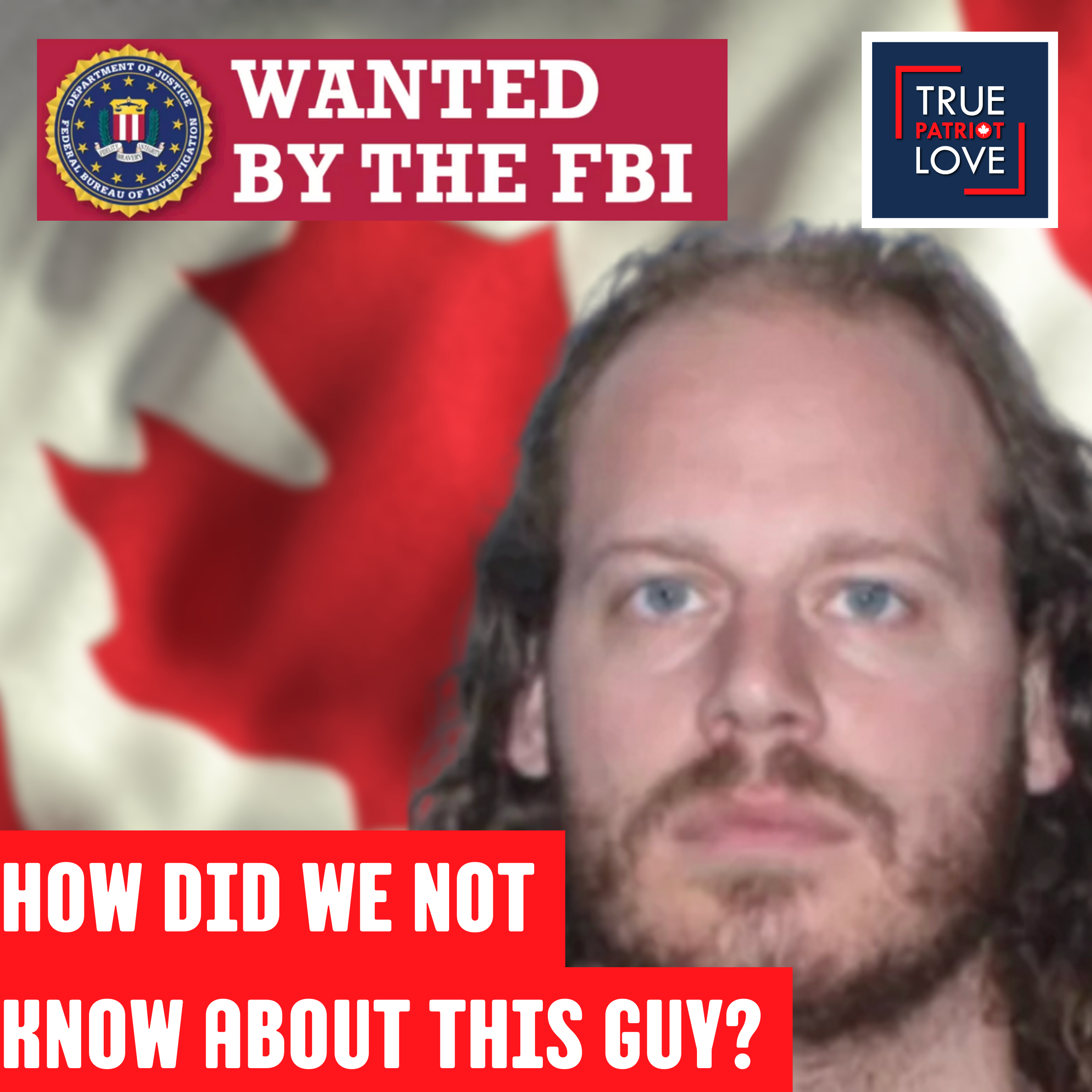
Frankly, a more gender inclusive uniform. Long overdue maybe. But first of all, this one caught my attention thanks to you. Actually, Brian, you, you kind of pointed it out to me that there is an investigation going on. An arrest has been made that has been deemed an espionage charge.
Matthew Robart is the gentleman who's been charged with this.
Tell me a little bit about this case overall. Where did this come from? How did this happen? And, and tell me what's going on.
[00:01:26] Speaker A: Yeah, perfect. So he's a CF incom intelligence operator. So he's a non commissioned member.
So below the rank of officer intelligence operator working for Canadian Forces Intelligence Command. So I would have worked in a similar environment as this gentleman about five or six years ago with the same levels of clearances, similar. I don't know what files exactly he was working on. It doesn't really matter. But it's, it's, the Internet is telling me that he's facing eight charges under the National Defense act with additional defenses under Canada's Foreign Intelligence and Security of Information laws, which were very conveniently changed as recently as the spring of 25 to be much more inclusive, in my opinion, to dissuade other whistleblowers from coming out talking about anything that they saw or did in their time under dnd.
So I'll just walk through a few of the charges here.
[00:02:21] Speaker B: Yeah, that'd be great.
[00:02:23] Speaker A: Yeah. So he's charged with communicating special operational information to a foreign entity.
[00:02:30] Speaker B: That's the first one that caught my attention. Sorry. And I may stop you as we go along with some of these.
What does that actually mean? That sounds like he's handing off the microchip to the enemy.
[00:02:40] Speaker A: So Special Operational Information is the important designation that was just changed, I believe it was, in March or April of this year to be basically include anything and everything that you could have seen, written about, overheard at the water cooler, anything at all, you know what I mean? That's deemed Special Operational Information is now a threat to national security. To divulge it to even an allied, an allied nation, you know what I mean? Without the requisite levels of bureaucracy and clearances and dis lists and terror lines and all the other Secret Squirrel stuff, you know what I mean? That goes on in terms of being able to say anything about specific levels of information, but this specific Special Operational Information or also say from now on, SOI designation is, is very broad.
So what does that mean? To answer your question, I have no idea. It could be almost anything. It could be something extraordinarily devastating about the locations and activities of specific troops on specific operational missions. It to down to the.
A designation of some kind of technical piece of equipment that someone could be using operationally that could be deemed SOI now because they use a certain type of laser or a sight on a rifle or a laptop or anything like this is in my opinion, very deliberately broad to keep people from talking to media in general.
[00:04:13] Speaker B: So, okay, he gets arrested back on Dec. 10 and investigators, Canadian Forces National Investigation Services is in charge of this with support from Royal Canadian Mounted Police. Now that, that and we'll get back to the charges. But he gets arrested on that date. Was this the first charge that was made and who made that charge, do you think? Was it the RCMP or military police?
[00:04:38] Speaker A: Well, if it's a charge under the NDA, it has to come from the military police.
I know that it was a joint investigation and I certainly hope it was being more led by the RCMP than it was cfnis. CFNIS has a horrific track record of bumbling, bungling investigations and just misrepresenting evidence or just doing anything and everything you can to basically dissolve an investigation from the beginning. And I can give copious examples of this from the past, but any of the charges he was charged with under the NDA specifically was coming from internal military.
[00:05:15] Speaker B: Okay, what other charges did they get him on?
[00:05:18] Speaker A: Breaching the Foreign Interference and Security of Information Act.
Three counts of conduct to the prejudice of good order and discipline, which in my opinion is a. Is a throwaway bullshit charge. There's, there's a few charges under the NDA, this being one of them. That's sort of a catch all so if you want to go after somebody administratively for something and you want to, you know what I mean, be able to grind them in a court martial or, or something like that, you know what I mean? You go after these, catch all charges so that you can find a way to sort of make their life cumbersome and miserable administratively. And these are one of those ones. I'm not saying that's happening here. I don't have all the information, but those are, those are sort of, those are dinky charges, in my opinion.
He's got firearm storage violations, which can be quite severe depending on the violation.
[00:06:06] Speaker B: That shocked me as well. Does that mean that when they arrested him, his weapon was out of its safe or what does that mean?
[00:06:14] Speaker A: That's a good question.
If he was charged with that under the NDA, I'm thinking that it would have been weapons that he would have been using operationally. So if he was in Ukraine, for instance, he would have been issued a, a personal weapon and he could have neglected to lock it up, you know what I mean? Securely in the vault or mishandling ammunition, you know what I mean? Like it says, firearm storage violations. So it's, it's something to do with not properly securing your weapon or ammunition, probably in theater is my guess. Otherwise it wouldn't have been an NDA charge. You would have faced criminal charges for personal weapons, probably.
[00:06:54] Speaker B: Right. Okay.
Any other charges in there?
[00:06:58] Speaker A: Yeah, he's got one. He's got one count of feigning disease.
[00:07:02] Speaker B: I don't even understand how, how is that even a crime? Is that a crime? Is that a, is that a law?
I.
[00:07:08] Speaker A: So I'd never heard of this, and I had to look this up after I saw it. So this is very interesting because feigning disease is something that you probably could have charged most of the senior leadership of the military with during the COVID years because of how many people were milking the sort of COVID sniffle to not have to come to work for the better part of two years. So what is, like, what does this mean? I wish I had a better answer for you. He. It sounds like, and my guess is that he was probably being asked to do things that he didn't want to do or just he was trying to get out of doing something to some degree. So he, he feigned a disease or a sickness to have to not do it. And how you would go about proving that he didn't have the sniffles or something, I don't, but I did kind of giggle at this one a little bit. Because it just brought me back to how many people could have been charged with this that I saw in 2020-2022.
[00:08:04] Speaker B: No, in, in this office alone.
I mean, we could put people in the chair for that.
So I don't. I don't really understand that one. That one was interesting.
The other thing I want to point out is I noticed the improper storage of firearms fell under the criminal code and the firearms Act. So it might have been personal.
I'm not sure.
So now it leads me to this question. An investigation is going on. As you point out, our military police have a record certainly, you know, a couple of real key cases over the last number of years where they, they've kind of bungled the case in some cases to the tune of millions of dollars in damages.
[00:08:50] Speaker A: Yeah. The perfect example of recent memory is, is the case with Danny for 10 major general retired Danny, 410 being charged with sexual inappropriate. You know what I mean, sexual misconduct, sexual allegations that were going. Stemming back to 1988 at his time in RMC.
So, like, it's very obvious that.
And I'll speak in generalities because nothing is true all of the time, but I think it's very obvious that in the last five years specifically, there's been probably closer to 10, but five for sure, that there's been a lot of witch hunts targeting male members, senior, senior male members of the leadership that weren't sort of toeing the line within the Canadian Armed forces as a.
To what Trudeau was asking or the MND was asking.
And, and they just decided to use these bogus charges, which ended up resulting in a lawsuit against the caf that was successful on behalf of Danny Fortin. So It's.
[00:09:53] Speaker B: It just $5 million in that, in that suit against the Canadian Armed Forces.
[00:10:00] Speaker A: Yeah, because. Because it was baseless. And the same thing another member is going through Steve Whelan, who I've worked with in Iraq in 2018.
And I, I chatted with him very briefly, sort of about it a couple years ago.
And, and it's, it's just destroying the careers and reputations of these people because they're do something is going on, in my opinion, behind the scenes where these people are not toeing the line with the folks that are asking them to, and they're just turning around and using the mps as a weapon. Luckily for the, for the people accused, not very successfully because they don't. They often don't know what they're doing.
[00:10:35] Speaker B: So how did Matt, for example, Matthew, find himself in this position?
What led to this in. Now you can't, you don't know. I don't know.
But in your opinion, how did this come about?
[00:10:51] Speaker A: So this, there's a bit more to the story. If you, if you go back and read prior article. There's, there's, there's about a dozen or so articles on this now and a few of them go into the history of some of the administrative problems that he was facing.
Potentially, I say potentially it's probably, but due to some of his behavior around the time of the convoy and the mandates. So there was a number of military members, myself included, you know what I mean, that could have been sort of deemed a troublemaker or they were seen at the convoy or their name was mentioned in a meeting somewhere. And I again, I include myself in this list because it happened to me. But I think he was vocal about some of the things going on around the mandates and the convoy and is voicing his disagreements sort of pretty openly in front of probably some of the leadership. So he was already facing some kind of career repercussion or consequence or administrative targeting on his back for the things that he was saying or doing.
Does that excuse any of the things that he's being accused of doing? For sure, no. And if he's done the things that put other troops or other national security interests in danger, then there absolutely needs to be consequences for that.
But there is more to this story and I hope that we do get to learn it. If it's all held inside of a court martial, we probably won't get to know, unfortunately. But they're definitely. The public should be aware that there's more to this than they'd have to do a deeper dive and should make up their own mind.
[00:12:19] Speaker B: If it's a court martial. The details of the case are not shared with the public?
[00:12:23] Speaker A: Not usually, no.
[00:12:26] Speaker B: Well, so that'll leave us in the dark as to what happened here.
I mean, do you feel that something major was shared? It sounds to me like he was sharing it with an ally. That this was a processing a process, a failure on his part, perhaps.
Do you feel like this is something. First of all, if he gets charged, does he go to jail?
[00:12:49] Speaker A: So if you're convicted under the N.D. i'm sorry, convicted. Yeah, under a serious. Of a serious offense that can result in jail time. You go to club, it's called Club Ed or the military jail that's in Edmonton.
And yeah, you can do, you can do time in jail and it's definitely not a good place to be. You'll Be polishing garbage cans until you can shave in them. But yeah, to answer your question, you can do jail time in the military and then as well also face potential jail time on the city side when you get out.
[00:13:25] Speaker B: That's a pretty heavy burden on somebody taking a position like this. Like you had, you also served, I guess, with military police. What, what is your confidence that this is going to be, first of all, when this gets to court? Do they have a case in your opinion? And, and will they be able to put something together that, that makes sense of this for all of us?
[00:13:48] Speaker A: Man, that's a good question.
I don't, I don't have enough details to say whether or not, you know what I mean, this is going to be a successful prosecution based on the investigation. But if, if he has done what they're say, what they say, or they, they allude to that he's done, which is potentially past information off to members of the Ukrainian military intelligence special operations community. It's pretty vague in terms of details, but if he was sharing things that he shouldn't have, then there should absolutely be consequences for that. Like this is not, especially in theater. You can't be messing around with the safety and security of operational information of Canadian members or any, any forces members. And Ukraine is a highly kinetic environment for a long time. Like those risks are real.
[00:14:37] Speaker B: I look forward to finding out more about what happens. And of course, this won't go to court for some time. Meanwhile, he's locked up.
[00:14:45] Speaker A: He's been released on conditions, so he had to sacrifice his passport and probably any personal firearms based on some of these charges, as well as the risk of flight and whatnot. So he's, he, he'll be out until this goes to court.
[00:14:59] Speaker B: So he's gone home. He's gone to his home, wherever that is here in Canada, awaiting trial.
[00:15:05] Speaker A: I think he's in Pet. I think he's in Petawawa as far as I can tell.
Let me ask, which is a prison all in itself. That's punishment enough, in my opinion.
[00:15:13] Speaker B: Oh, that's, that's interesting that you say.
[00:15:14] Speaker A: That, because we are sorry. It's all those people in Petawa.
[00:15:17] Speaker B: I'm sure that they feel the same way. As we take a look at the housing conditions that our military is living in and some of the just conditions of the military overall. On that point in the new year, you and I will sit down with our very own Paul Micucci here and answer to the notion that our Minister of Defense has put out there that we're ready to defend ourselves in a situation in a theater of war. We'll talk about that.
The smirk on your face already is enough.
But in the new year we'll get to that. I did want to touch on this before we go today though.
A new military uniform is being put into play that some think is way overdue and is commensurate with the other equipping that we do and so forth in our military.
But this week it broke that there would be a gender conforming uniform that would arrive for women in the military.
What are your thoughts on this?
[00:16:16] Speaker A: I think this is a great move by the Canadian Armed Forces and long overdue. There's a number of women that I've served with that have indicated sort of, that they had, you know, it wasn't like they were writing to their senior leadership or anything saying, hey, this is what we need. But when you have conversations, you know what I mean? Stuff comes up. And they were mentioning that especially the women that were, were in really good shape athletically because I've worked with a number of them that were very impressive intellect, you know what I mean? Emotionally mature people, very physically fit, like the kind of person that you want in uniform. And when you dress them in this sort of one size fits all sort of potato sack that they issue you on basic training, it's not a good look and it's, it's a, it's a huge step in the right direction. Even though it seems like a small thing to, to be targeting, I guess, you know what I mean? But it's, it definitely is something that will add some pride, a morale boost to the female members that can wear a uniform and look good in it and be proud to wear it. I think this is a big win, even if it's not necessarily the most interesting topic or subject. This is a, this is a smart move and this should have been done a long time ago.
[00:17:26] Speaker B: Maybe I'm the only one that thinks this. And, and no disrespect to the military here in Canada at all, but I've often thought that our, our Canadian Armed Forces uniforms looked a little outdated.
[00:17:39] Speaker A: Yeah. And they, until very recently they were.
[00:17:41] Speaker B: An opinion, by the way. Yeah.
[00:17:43] Speaker A: Yeah. And there are, so there are different uniforms too, depending on which element and what your trade is. And they, and they do, some of them fit very differently. And like, hey, if you're, if you're a young fit, you know what I mean? Outgoing, motivated, savvy soldier, like your uniform should reflect that. And it, these things do matter to people, like unfortunately or fortunately, they do. And I think this is big. I think this is cool. And I think the women are going to be proud of the way they look.
[00:18:12] Speaker B: It looks like there's a lot of changes underway. A lot of money has been promised. We're now focused on housing, as I mentioned before, properly equipping our military. It'll be interesting in the new year for us to catch up and have a discussion about where we are and where we actually need to be compared to, you know, reports that we're hearing from our minister of defense that we are ready to go in a time of war.
And so we'll talk about more on that topic in the New year. Meanwhile, Brian, I wish you a happy New year. Thank you so much for joining the team and being here with us. We appreciate it.
[00:18:45] Speaker A: Thanks very much. I got a ton more to share too, about the, specifically about housing and personal stories of folks I know who are still ongoing and dealing with all this stuff. So I'm, I'm pumped for the new year and I got, I got lots to talk about. I'll never shut up.
[00:18:59] Speaker B: I like it, man. Thank you so much. We'll see you bright and early in the new year.
[00:19:03] Speaker A: Yes, sir. Thank you. Happy New Year.
[00:19:05] Speaker B: We'll see. We'll see you right here on tpl. Don't forget to subscribe. Go to the new website. You'll really like it. TPL Media ca subscribe there for extra content and all kinds of fun. Meanwhile, comment, share it with a friend and we'll see you next time.