Episode Transcript
[00:00:00] FOREIGN hello, everybody. My name is Jonathan Harvey, and this is the weekly take where we look at Canada's biggest political stories of the week. What happened, why it matters, and how it actually affects you. On today's show, Venezuela's turning point. How the US Captured Maduro and reshaped global power. How liberal ideology hollowed out masculinity and manufactured a crisis. Parents and voters have less say in education as school boards expand their power in Canada.
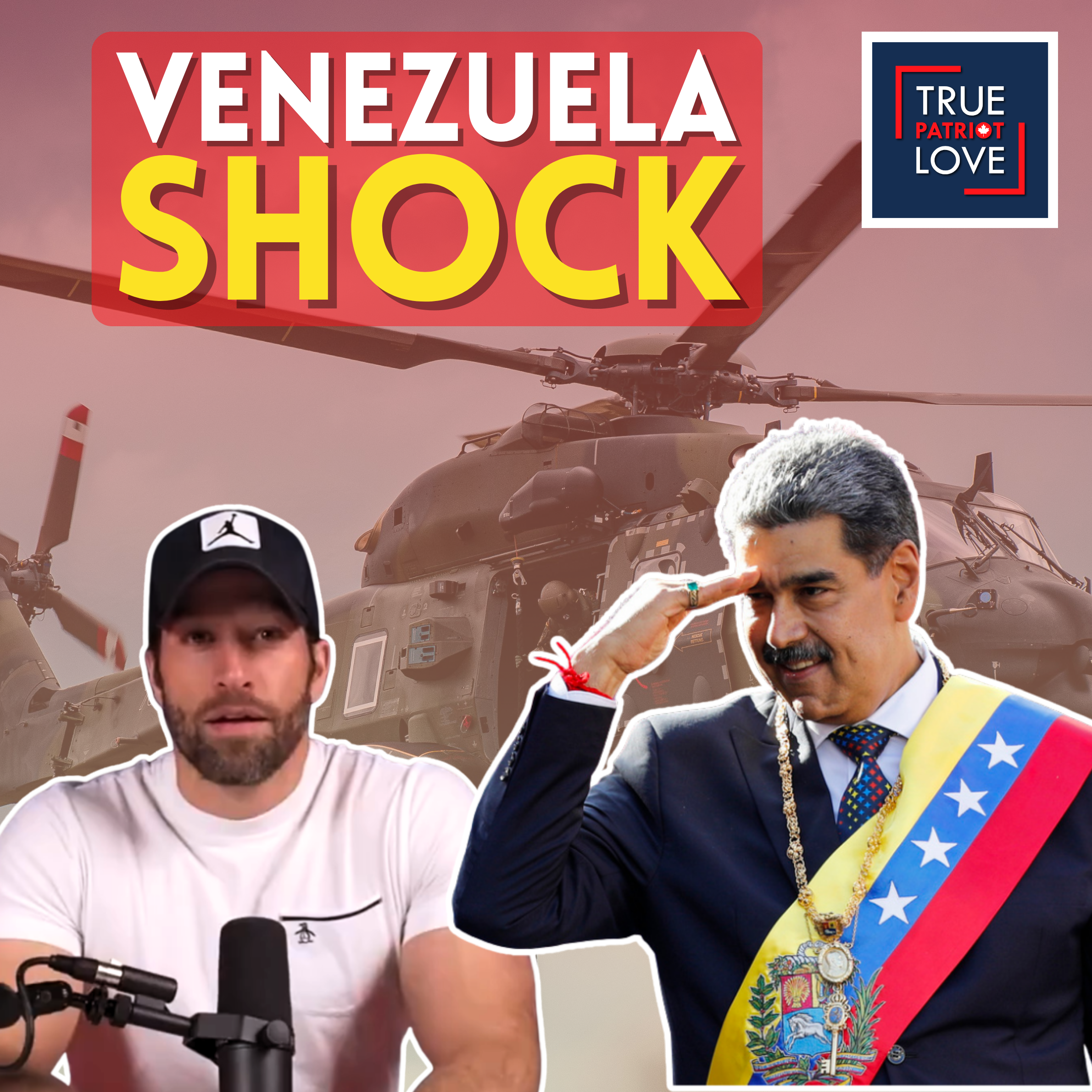
[00:00:26] Christia Freeland named economic advisor to Ukraine raising conflict of interest concerns in Canada. And finally, how Trump's USMCA demands actually affect our country. And why I think it's for the better. All right, let's get into it. Story number one for the day, Venezuela's turning point, how the US Captured Maduro and reshaped global power. So today we're sort of looking at the latest developments between the United States and Venezuela. And this video is intended to provide information, not really opinion. So we'll cover the US Military operation, how the world responded, what Venezuelans themselves think, the legal case in the US Courts, and what this all could mean for countries beyond our hemisphere, including Canada and its economy. On January 3, the United States executed a military operation inside Venezuela known as Operation Absolute Resolve. US Forces struck Caracas, targeting the presidential palace and captured President Nicolas Maduro and his wife, Celia Flores. They were flown to the United States to face federal charges, including drug trafficking and narco terrorism. This was the most significant American military intervention in Latin America in decades, the closest parallel being the 1989 operation in Panama against Noriega. The US government described this operation as a law enforcement action against a regime it calls a major supplier to drug cartels and a destabilizing force in the region. Officials cited Maduro's long history of corruption and his ties to criminal networks, asserting that decisive action was necessary to protect American citizens and regional security.
[00:01:49] The operation triggered immediate international attention. At an emergency United Nations Security Council session, countries including Brazil, Mexico, China, Russia, Colombia, South Africa, Spain and Italy condemned the operation as a violation of sovereignty and international law, with many leaders calling it a crime of aggression. The US Defended its actions, rather framing them as criminal enforcement rather than a war against Venezuela. Inside Venezuela, the Supreme Court recognized the VP Delsey Rodriguez as acting president and the government declared a state of emergency. Maduro supporters flooded the streets, framing the US Strikes as foreign aggression. At the same time, opposition aligned Venezuelans and diasporic communities around the world celebrated what they saw as the removal of a corrupt and authoritarian leader. Public sentiment remains complicated. Many Venezuelans have endured years of hardship. And while some welcomed Maduro's capture, others are wary of foreign intervention and the potential for instability now. This outcome did not arrive overnight. It followed months of escalating pressure from the United States, including expanded sanctions targeting officials and entities tied to Maduro, naval blockades in the Caribbean, and military strikes on vessels allegedly tied to drug trafficking. These measures were designed to weaken the regime and reduce revenue streams that funneled oil profits to regime insiders, terrorists, and allied foreign governments. This tracks as Venezuela holds the largest proven oil reserves in the world, control over its energy resources is a major geopolitical factor, and the prospect of US Companies investing to rebuild its oil sector could entirely reshape the global energy market. The idea, at least among some U.S. policymakers, is that ramping up production in Venezuela could lower energy prices globally, reduce the influence of OPEC and oil pricing, and weaken the strategic leverage of energy exporters like Russia. For Canada, this matters on multiple levels. Canadian energy producers compete in the same markets influenced by Venezuelan crude. New political and economic activity around Venezuelan oil could put downward pressure on prices that Canadian producers rely on to justify investment in heavy oil infrastructure and pipelines. It could also complicate decisions around LNG exports and pricing strategies tied to global benchmarks. It also intersects with Canadian foreign policy.
[00:03:57] Ottawa has historically balanced a commitment to human rights and democracy with pragmatic energy trade. A shifting Venezuelan landscape means Canadian diplomats and energy leaders have to decide how to align support for democratic outcomes without destabilizing global energy markets that Canadian jobs depend on legally. The case against Nicolas Maduro and Celia Flores is now playing out in US Federal court in New York. Both have pleaded not guilty to charges including narco terrorism, conspiracy, cocaine importation conspiracy and weapons possession. Maduro appeared in court this week claiming he was a prisoner of war and asserting he remains Venezuela's rightful president. His legal team is expected to file motions to dismiss the case, citing head of state immunity and challenges to the legality of his capture and transfer to the US the next major hearing in this case is scheduled for mid March 2026, giving both sides time to prepare legal arguments. Because the case touches on international law, executive authority, and treatment of a foreign head of state in the US jurisdiction, it's likely to be watched not just in Caracas and Washington but in capitals around the world. Courts will be a key arena for debating whether this kind of action sets a precedent for future foreign operations, which to me is quite a big concern now. Critics argue that capturing a sitting head of state without explicit UN authorization violates international law, and more than this could set a dangerous global precedent. Supporters point to historic examples such as the removal of Manuel Noriega, arguing that when a regime threatens a neighboring region through drug trafficking or terrorism, decisive action can be justified.
[00:05:24] Risks remain high within Venezuela itself. While Maduro has been removed from power and detained, loyalists within the military and government remain, and factions could resist or undermine the interim leadership, creating conditions for internal conflict or unrest. There have also been reports of journalists being detained and media operations restricted amid the heightened security environment. The situation also has broader geopolitical implications. The United States has demonstrated its military reach and resolve in the Western Hemisphere. At the same time, Russia and China have lost a strategic ally in the Americas, deepening global tensions.
[00:05:56] Moscow had long viewed Venezuela as a foothold for projecting influence in the region, providing loans, military support and economic partnership. Beijing similarly invested heavily in Venezuelan oil and infrastructure. Their public condemnations at the Security Council underscore the broader strategic rivalry that is at play in the coming months. Whether this initiative leads to a stable political transition in Venezuela, reconstruction of its oil sector and improved regional security, or or whether it escalates into a wider conflict with global powers remains uncertain. Venezuelans themselves are watching closely, some hopeful, others fearful, as the country faces a new, uncertain chapter. For Canada, its economy and foreign policy are indirectly tied to this unfolding story, reminding Canadians that events far beyond our borders can have real impacts at home. All right, next up, story number two for the day how liberal ideology hollow masculinity and manufactured a crisis.
[00:06:49] 75,000 men died prematurely in Canada in a single year. Not in a war, not in a pandemic, not in some unforeseeable catastrophe. They died quietly at home, some in hospitals, many in isolation by suicide, addiction and diseases that could have been prevented. And only now does the federal government believe men are worth helping. After nearly a decade of shaming, masculinity, demonizing male frustration and lecturing men about so called toxicity, the Liberals have suddenly discovered men's health. Federal Health Minister Marjorie Michael promises a national strategy for men and boys following a damning report from Movember and researchers at the University of British Columbia showing that 75,000 Canadian men died prematurely in 2023, again many from preventable causes.
[00:07:32] So while this government announcement is framed as compassion, it is not. It is a confession. The Liberals didn't just fail to fix men's health, they helped create the conditions that made it dramatically worse. The Movember UBC report documents a pattern that has been visible for years.
[00:07:47] Men are more likely to delay seeking care, and when they do. They are more likely to feel dismissed, rushed, or talked at, rather than listened to. They are far more likely to struggle with addiction, depression and suicide. In fact, in Canada and the United States, men are roughly four times more likely to take their own lives, accounting for close to 40,000 deaths annually. As for illness and disease, 25,000 men died prematurely from preventable causes linked to late diagnoses, untreated chronic illness, or disengagement from primary care. These are not failures of biology. They are failures of trust. And trust does not erode by accident. It is dismantled deliberately, often under the banner of moral progress. For nearly a decade, the Liberal Party has treated masculinity not as a biological reality, but as a social defect to correct trace. Like competitiveness, stoicism, risk tolerance and physicality, behaviors that have defined men across cultures forever have been reframed as liabilities. In fact, government funded NGOs, activist language embedded in policy and public education increasingly present male behav as dangerous unless softened, monitored or reprogrammed. At the Same time, Liberal MPs and aligned advocacy groups have argued that right wing male voices like me should be censored or deplatformed because they are allegedly radicalizing or unsafe. But this was never just rhetoric. It was cultural signaling. And culture shapes health. If men are repeatedly told that their instincts are pathological, their emotions are dangerous, and their voices are illegitimate, they do not lean into institutions, they retreat. A man who does not trust a culture does not trust its doctors. He does not trust its bureaucrats, public health campaigns, or suddenly concerned press conferences. Once that belief takes hold, disengagement is not irrational, it's adaptive. Silence becomes safer than honesty. Avoidance replaces intervention, self medication replaces care, and isolation replaces community. Again, this is not stubbornness, it is survival. The Movember report notes men delay care because they feel unheard. They have been told their grievances are illegitimate because they are privileged. They have been told their instincts are outdated and that if they don't conform politically, they are part of the problem.
[00:09:49] So when the same institutions now say, we are here to help, men do not hear compassion, they hear contradiction. You cannot spend a decade telling men they are the problem and then act surprised when they stop showing up. But now, after years of hostility towards masculinity, the government proposes a national men's health strategy focused on mental health, addiction and public safety. But culture cannot be fixed with a PDF. You cannot expect men to trust a wellness framework designed by the very political class that spent years telling them that they were dangerous. A real strategy would stop framing masculinity as a defect and start treating men as capable, responsible agents. Healthcare would be designed around how men actually behave, direct communication, faster diagnostics, and respect for autonomy. Community would be prioritized over bureaucracy, funding local non ideological institutions where men bond through shared purpose rather than therapeutic language, and trust would be restored by restoring voices. A man who feels politically hunted will never feel institutionally safe. And when this happens, it is a man's duty to choose responsibility over victimhood and give back more to the world than he takes. Until men are allowed to be met again, this crisis will continue to be measured the same way it has for years in Lives lost.
[00:10:59] All right, moving on. Story number three for today, Parents and voters have less say in education as school boards expand their power in Canada over the past 30 years, something important and largely unnoticed has happened in Canada's education system.
[00:11:12] Parents and voters didn't lose influence in one dramatic vote or sudden overhaul. Instead, control slipped away gradually, board by board and merger by merger, as decision making moved further from parents, classrooms and communities the schools are meant to serve. A new study released on January 5 by the Aristotle foundation lays this out clearly. Across the country, local school boards have been consolidated into large regional authorities. The justification was efficiency. Rather, however, the consequence was a power vacuum.
[00:11:39] Ontario is the clearest example. Since the 1960s, the number of school boards has dropped from roughly 3,700 to just 72. That wasn't driven by falling enrollment. Student numbers stayed relatively stable. What disappeared was local representation.
[00:11:53] As boards grew larger, accountability weakened, and trustees came to represent tens of thousands of students at once. As a result, parents lost a clear line of sight into decision making. Communities stopped knowing who was responsible and ultimately, who can be held accountable.
[00:12:06] Of course, this is terrible for Canadians because it erodes democratic control over how billions of education dollars are actually spent. So while people are still paying the bills, they are increasingly shut out of the decisions that shape their children's daily lives. It's even worse for students when education is governed from a distance. Systems become rigid and impersonal, policies are designed to satisfy ministries rather than classrooms, and one size fits all rules replace judgment rooted in local reality. Over time, learning takes a backseat to compliance, and schools become a delivery mechanism for ever changing directives and and ideology instead of institutions grounded in the needs of children.
[00:12:39] And you can see the results bureaucratic bloat, misplaced priorities, and ridiculous initiatives that may look important on paper but fail to improve outcomes where it actually matters. In Ontario, this trend has accelerated even further. New legislation now allows the education minister to intervene directly in school boards and even take control of them. The minister has gone so far as to question whether elected trustees should exist at all. This should concern anyone who believes schools should answer to the public. Eliminating trustees doesn't solve a governance problem. It completes the shift of power away from parents and communities and concentrates it in the hands of even more distant bureaucrats who never have to face the families affected or the reality of their decisions. Now, this study argues there is another path, and a better one. Instead of more top down control, authority can be pushed back to individual schools through locally governed councils made up of parents, teachers and community members. It's an approach Canada has used before, and it's one that recognizes a simple truth. The people closest to children are best equipped to make decisions for them. For Canadians who want to push back, the message is straightforward. Reject the idea that democracy is the problem. Demand decentralization, not deeper control from above, and ask political leaders a basic question. Do parents deserve a meaningful voice in schools? Or are decisions better left to ministries and administrators because once schools stop belonging to communities, they don't become more effective? And we have the proof. And the first people to feel that loss aren't politicians or bureaucrats. It's the kids. All right, moving on. Story number four for the day Christia Freeland named Economic Advisor to Ukraine raising conflict of interest concerns in Canada Liberal MP Christia Freeland announced that she will step down as the Prime Minister's special representative for the reconstruction of Ukraine after being appointed as an advisor for the economic development by Ukrainian President Volodymyr Zelensky after significant pushback. She has now also agreed to resign her seat in Parliament in Canada in the coming weeks. Zelensky praised Freeland for her expertise in attracting investment and implementing economic reforms, describing her as highly skilled in these matters and crucial to Ukraine's resilience. The appointment comes amid broader reshuffling. Zelenskyy recently promoted his chief of military intelligence to presidential chief of staff, and his former chief of staff stepped down following a high profile corruption investigation. The president framed these moves as necessary to prepare Ukraine for both a potential peace deal with Russia and to strengthen its defenses in case the war continues. Berlin's new role is unpaid, but it has drawn immediate criticism in Canada. Conservative MPs question how she could simultaneously serve as an advisor to a foreign government while still holding her parliamentary seat in her previous role as Canada's special representative for Ukraine's reconstruction.
[00:15:18] Michael Chong, the party's foreign affairs critic, called it a clear conflict of interest Don Alves questioned how a sitting member of Parliament could act as an advisor to a foreign government without violating the Conflict of Interest Act. While Freeland has committed to resigning from Parliament and stepping aside from her government's role, the optics remain problematic. During her career, Freelan has been a central figure in Canada's support for Ukraine. She was deputy Prime Minister and Finance Minister under Justin Trudeau, and she spearheaded both domestic and international efforts to bolster Ukraine's war effort. Under her guidance, Canada has committed nearly $24 billion to Ukraine, including a $2.5 billion pledge announced by Prime Minister Mark Carney during Zelensky's visit to Canada just last month.
[00:15:57] For me, herein lies the bigger problem.
[00:16:00] Even after resigning her parliamentary seat, she will continue to influence decisions affecting Canadian aid to Ukraine, shaping economic policy and reconstruction priorities in ways that directly involve Canadian taxpayer money. This makes it difficult for the government to claim impartiality or to be taken seriously in debates about the scale and direction of financial support.
[00:16:19] It should also be noted Canada's own GDP growth is in decline, while Ukraine's economy has grown by nearly 3% in 2025 despite the war. In my opinion, the timing is also politically delicate. In the context of peace negotiations, Ukraine's recovery and reconstruction strategy will inevitably influence any diplomatic discussions with Russia. Freeland, as a high profile former Canadian minister and now a direct advisor to the Ukrainian government, positions Canada as deeply entrenched in Ukraine's domestic policy decisions. That level of involvement could complicate international efforts to mediate peace or broke compromises because Russia and other actors may perceive Canada not as a neutral partner but as an active player shaping Ukraine's post war economic landscape, which is totally fair. The optics are further complicated by the fact that Freeland has already moved on from domestic politics. She is set to take on a role with the Rhodes Trust in Oxford, England next summer, signaling a shift in her priorities away from Canadian governance. Yet she will remain a key figure in influencing billions of Canadian dollars flowing to Ukraine.
[00:17:17] For voters and taxpayers, this raises legitimate questions about oversight, accountability and where national interest ends and personal influence begins. In short, Christia Freeland's appointment is more than a personal career move. Even when she steps down from Parliament, she will continue to wield influence over Canada's aid to Ukraine at a time when Canadians should not be shouldering the cost. Now, with over 24 billion already committed and no clear framework for evaluating the effectiveness of that spending, her continued role represents a conflict of interest for Canadians. It also sends the wrong signal to Russia and any neutral mediators that Canada can act as an impartial arbiter in peace talks. On top of that, it underscores a broader challenge how to support Ukraine responsibly without overextending Canadian taxpayers or compromising Canada's diplomatic credibility.
[00:18:03] And now for our last story of the day. Trump's USMCA demands could actually be a win for Canada Reforming supply management and digital laws for consumers in 2026, the United States, Mexico Canada Trade Agreement, known as the usmca, is once again in the spotlight. Originally crafted during Donald Trump's first administration, the deal was hailed as a new gold standard for North American trade. At the time, it was praised for protecting more than 85% of Canada U.S. commerce from tariffs and facilitating roughly $2 trillion in trade in goods and services across the continent each year.
[00:18:35] Now, as renegotiations begin, the Trump administration has made clear that certain issues are non negotiable. These demands are not optional suggestions. They are firm points Washington intends to address. Chief among them are Canada's Dairy Supply Management System, the Online News act, and the Online Streaming Act. Supply management in Canada has long been a shield for domestic dairy farmers, controlling production and limiting imports to maintain higher prices. From the US Perspective, the system is restrictive. It reduces access for American producers and inflates costs for Canadian consumers. The Trump administration is pressing Ottawa to reform the system, particularly the tariff rate quota allocations that favor Canadian processors. While politically sensitive, especially in Quebec, the demands are open the market to more U.S. producers and adjust the quotas to meet the spirit of the original USMCA agreement. Similarly, the Online News act and Online Streaming act have drawn criticism from Washington. Both are laws designed to, quote, unquote, protect Canadian content. The News act requires major tech platforms to pay for linking or sharing Canadian journalism, while the Streaming act obligates U.S. entertainment companies to prioritize, fund and promote Canadian productions. The U.S. government considers these measures discriminatory and restrictive, arguing that they unfairly burden American companies. Trump's stance is firm. Canada must address these laws as part of the negotiations.
[00:19:51] At first glance, these demands may feel confrontational, even intrusive. They are non negotiables, framed as conditions for maintaining smooth trade relations under the usmca. But when we look closer, they present opportunities For Canadians. Supply management reform would lead to lower dairy prices, reduce waste, and create a more efficient market for consumers. Polling shows that a significant number of Canadians already support modifying or reducing supply management, with many recognizing the need to relieve inflationary pressures.
[00:20:18] Adjustments to tariff rate quotas could be phased in gradually minimizing political backlash while delivering tangible economic benefits. The digital and media regulations are similar. While Canada's intent is cultural preservation, these laws have side effects of limiting access to foreign content, soft censorship, suppressing independent media, and raising costs for Canadian consumers. Addressing these requirements in USMCA negotiations will make digital content more affordable and accessible for Canadians all without our government controlling what content is promoted and what content is suppressed.
[00:20:48] Economists note that both supply management and the digital acts share a common theme protectionism that ends up costing Canadian consumers. Opening the dairy market to more competition and making online content more accessible would reduce costs, expand choice and make the economy more competitive overall. At the same time, careful negotiations can ensure that Canadian farmers and creators continue to receive support, just in a way that doesn't penalize everyday Canadians. Despite the firm nature of Trump's demands, trade analysts remain confident that the USMCA itself will survive the renegotiation. Compromises will be necessary, but these concessions do not have to be disastrous. Instead, they can serve as a catalyst for long needed reform in areas where Canadian policy has created inefficiencies, inflated costs and created censorship. In essence, while these non negotiables come from the US they align with what Canadians themselves have wanted for some time lower prices, less waste and softer regulations.
[00:21:41] So, providing the Canadian government is willing to play ball, we will retain the broader benefits of the USMCA and emerge with a trade framework that better serves Canadian families, businesses and consumers. It's a rare moment where external pressure could produce internal improvements, stronger markets, more competitive pricing, and policies that reflect both national interests and consumer welfare. Ultimately, while Trump's demands may feel like a challenge, they also highlight areas where Canada has room to improve Supply management reform, Smarter digital regulations and alignment with US Expectations will strengthen our economy, improve access to goods and services, and protect Canadian interests in the long term. If approached carefully, the renegotiation could turn what appears to be a series of non negotiable demands into a real opportunity for Canadians.
[00:22:26] Well, that's a wrap folks. Thanks for tuning in and we'll see you next week.